When competing in a high-speed discipline like the Steel Challenge, your choice of optics can be the difference between a podium finish and a mid-pack result. The Best Scope For Steel Challenge needs to offer an incredibly forgiving eye box, crystal-clear glass for rapid target acquisition, and a reticle that doesn't get lost against the white steel plates. Unlike long-range precision shooting where you might spend seconds dialing a turret, Steel Challenge is all about transitions and speed; you need a scope that feels like an extension of your eye. In this guide, I will break down the top six options that provide the optical edge required to shave tenths of a second off your stage times. Whether you are running a Rimfire Rifle or a PCC, finding the Best Scope For Steel Challenge requires balancing weight, field of view, and illumination brightness.
Top Product List: Best Scope For Steel Challenge
- Vortex Optics Venom 1-6x24 Second Focal Plane – Best Overall for Speed and Versatility.
- Athlon Optics Argos BTR GEN2 1-8x24 – Best Budget-Friendly LPVO for Competition.
- Leupold Mark 3HD 1.5-4x20 – Best Lightweight Option for Rimfire Divisions.
- Primary Arms SLX 1-6x24mm SFP Gen III – Best Reticle for Rapid Target Acquisition.
- SIG SAUER Tango-MSR LPVO 1-10X28mm – Best High-Magnification Range for Multiple Disciplines.
- Burris Fullfield IV 3-12x42 – Best for Precision-Focused Steel Stages.
Vortex Optics Venom 1-6x24 Second Focal Plane
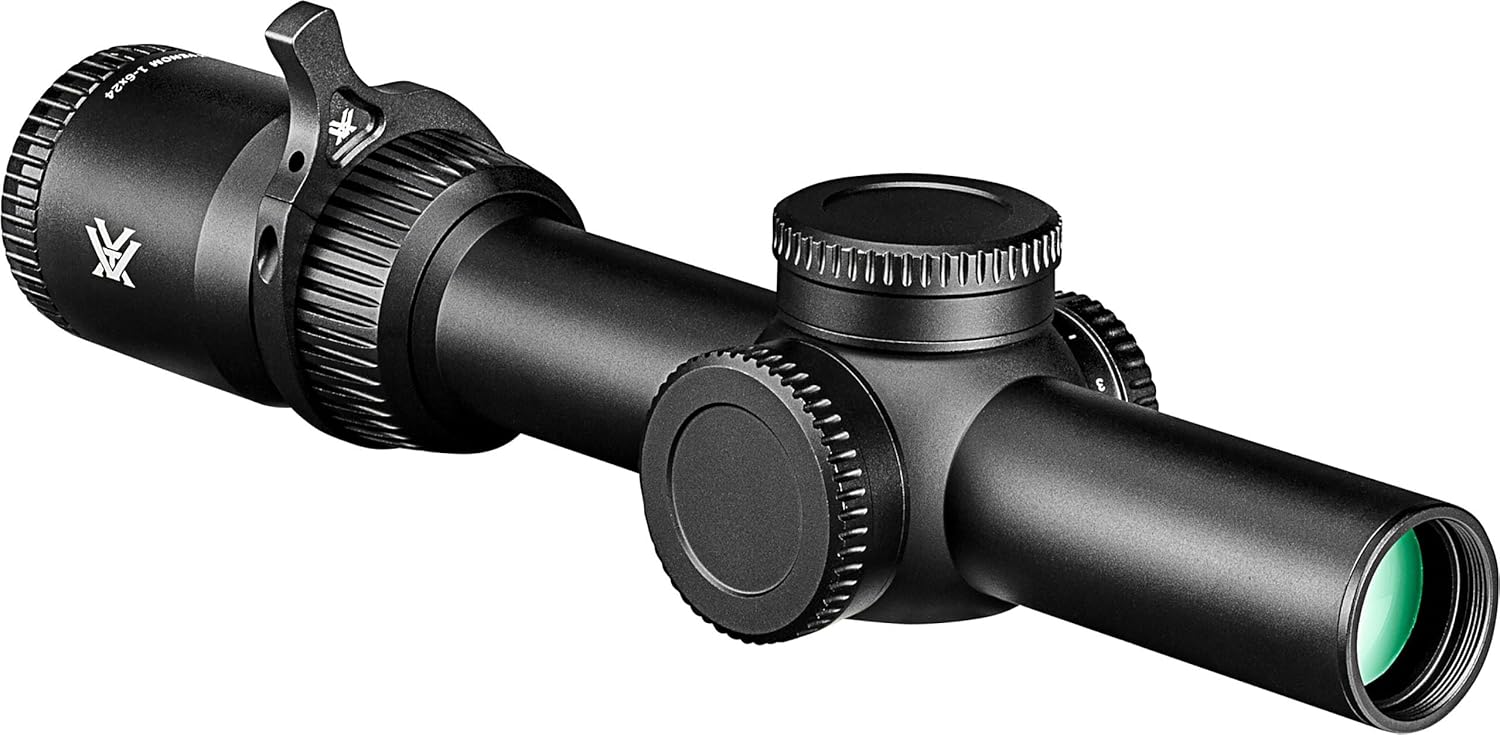
The Vortex Venom 1-6x24 is a purpose-built Low Power Variable Optic (LPVO) designed to bridge the gap between entry-level glass and professional competition gear. It features a true 1x magnification that mimics a red dot, making it ideal for the close-quarters, rapid-fire nature of the Steel Challenge.
- Magnification: 1-6x
- Objective Lens: 24mm
- Tube Size: 30mm
- Reticle: AR-BDC3 (SFP)
- Weight: 19.5 oz
- Eye Relief: 3.7 inches
Pros:
* Incredibly bright illuminated reticle.
* True 1x magnification for "both eyes open" shooting.
* Includes a throw lever for instant magnification changes.
Cons:
* Slightly heavier than dedicated rimfire scopes.
* Capped turrets aren't ideal for those who like to dial mid-match.
Glass Clarity & Reticle
The glass quality on the Venom series is surprisingly punchy, offering impressive edge-to-edge clarity that minimizes distortion during fast pans. The AR-BDC3 reticle is located in the Second Focal Plane (SFP), meaning it stays the same size regardless of magnification, which is a massive advantage in Steel Challenge where you want a large, consistent aiming point. The center "bright dot" acts much like a high-end red dot at 1x power.
Eye Relief & Eye Box
With 3.7 inches of eye relief, the Venom provides a generous safety margin. More importantly, the eye box is very forgiving; even if your cheek weld isn't perfect during a rushed transition on a stage like "Smoke & Hope," you can still acquire a full sight picture without the "shadowing" effect common in cheaper optics.
Durability
Vortex is known for building tanks, and the Venom is no exception. It is aircraft-grade aluminum, nitrogen-purged, and O-ring sealed to be fully waterproof and shockproof. I’ve banged this against barricades during local matches, and it hasn't shifted zero by even a fraction of an MOA.
Elevation & Windage Knobs
The turrets are capped, which I actually prefer for Steel Challenge. Once you zero at 25 or 50 yards, you don't want your knobs spinning accidentally while moving between stages. The clicks are tactile and audible, though you likely won't touch them once the match starts.
Magnification & Parallax
The 1-6x range is the "sweet spot" for steel. Most stages are shot at 1x or 2x, but having the 6x allows for precise zeroing or shooting longer-range "bonus" targets in outlaw matches. The parallax is fixed at 100 yards, which is standard for this class and works fine for steel targets.
Mounting & Accessories
It comes with a thread-in throw lever, which is a $60 value on its own. It fits any standard 30mm rings. I recommend a cantilever mount to get the proper eye relief on an AR-platform rifle.
My Personal Experience
I mounted the Venom 1-6x on my 9mm PCC for a regional Steel Challenge match. The illumination is truly "daylight bright," which helped me track the reticle against the white plates even in the high-noon sun. On the stage "Five To Go," the transitions felt seamless. The weight added a bit of stability to my front end, helping to dampen the swing.
Online Customer Comments
Reddit users in r/CompetitionShooting often praise the Venom for its value, stating it "punches way above its weight class." Many users noted that the included throw lever is a game-changer for matches that require quick zoom adjustments.
Verdict
The Vortex Venom is arguably the Best Scope For Steel Challenge for those who want a "buy once, cry once" optic that performs like a high-end racing part without the $2,000 price tag.
➡️➡️➡️ Explore User Feedback and Current Pricing on Amazon
Athlon Optics Argos BTR GEN2 1-8x24
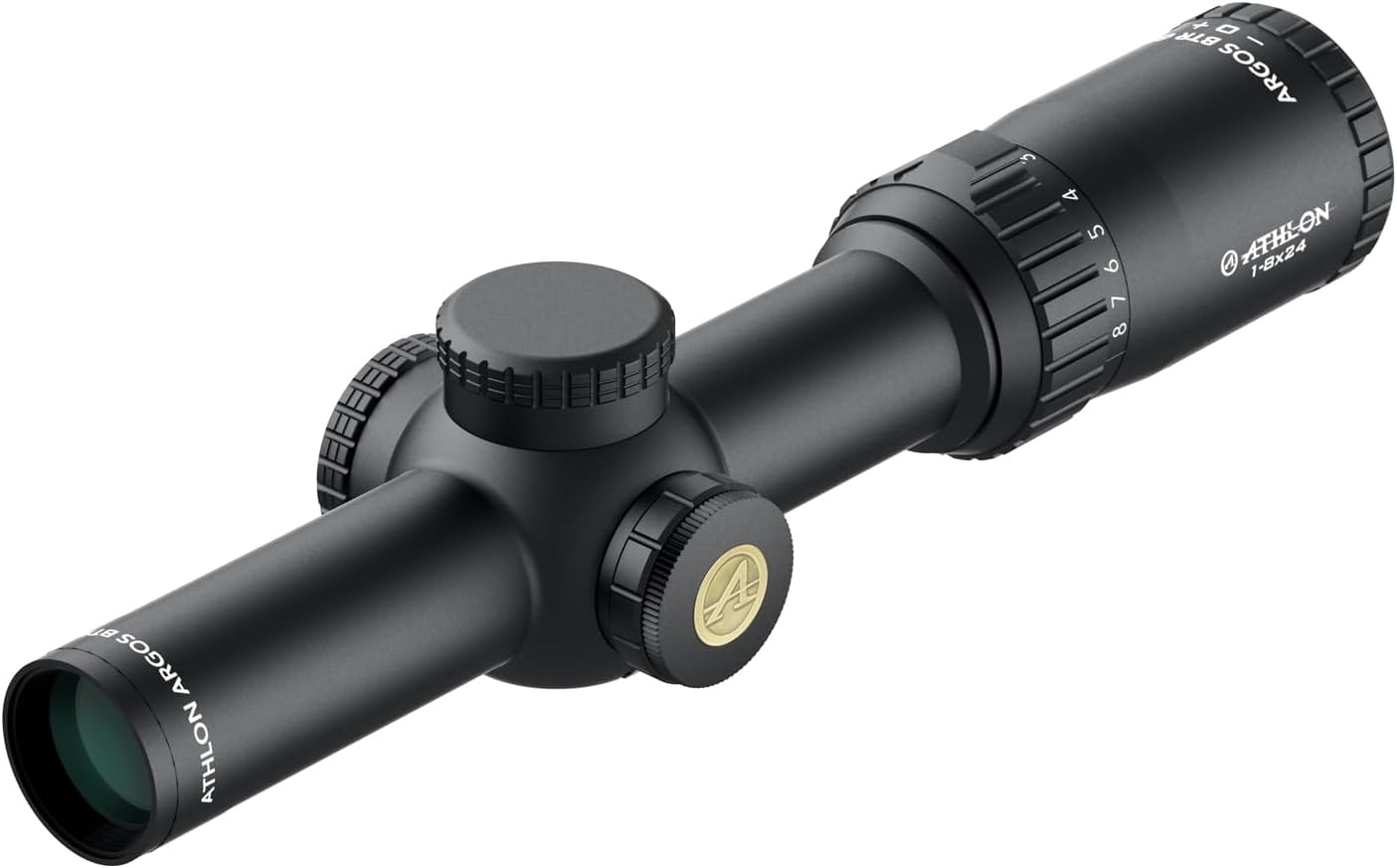
The Athlon Argos BTR GEN2 offers an expanded 1-8x magnification range, providing a bit more reach for shooters who use their Steel Challenge rifle for other sports like 3-Gun. It is a robust, feature-rich LPVO that focuses on mechanical precision and reticle versatility.
- Magnification: 1-8x
- Objective Lens: 24mm
- Tube Size: 30mm
- Reticle: ATMR4 SFP IR MOA
- Weight: 16.1 oz
- Eye Relief: 3.4 inches
Pros:
* Very lightweight for an 8x power scope.
* Extremely clear glass for the price point.
* Tactile, precision-engineered turrets.
Cons:
* Eye box tightens up significantly at 8x magnification.
* Illumination could be slightly brighter for desert environments.
Glass Clarity & Reticle
Athlon uses fully multi-coated lenses that do an excellent job of light transmission. At 1x, the image is flat and natural. The ATMR4 reticle features a center circle and dot that draws the eye in quickly, which is vital when you are trying to find the "Stop Plate" under pressure.
Eye Relief & Eye Box
At 3.4 inches, the eye relief is adequate but requires a consistent mount. The eye box is great at low power, but as you crank it up to 8x, you have to be much more precise with your head position. For Steel Challenge, where you stay at low power, this isn't a major hindrance.
Durability
The Argos BTR GEN2 is built from 6061T6 aluminum. It’s heat-treated and one-piece, ensuring it can handle the vibration of thousands of rounds of rimfire or centerfire ammo. The "GEN2" upgrades specifically improved the internal components for better long-term reliability.
Elevation & Windage Knobs
Unlike many LPVOs, these turrets are actually quite nice to dial. They have a distinct "click" that feels professional. While you won't dial for Steel Challenge, the quality of the turrets speaks to the overall build quality of the internal erector system.
Magnification & Parallax
The 8x top end is overkill for purely steel plates at 20 yards, but it makes this a versatile "do-it-all" optic. The fixed parallax is set for 100 yards, and I found the image stayed sharp even when shooting the close-in plates of "Pendulum."
Mounting & Accessories
Standard 30mm mounting. It doesn't come with as many "extras" as the Vortex, so you'll need to pick up a throw lever if you plan on changing magnification on the fly during a stage.
My Personal Experience
I used the Argos on a Ruger 10/22 build. The 16-ounce weight is a major plus; it keeps the rifle light and "flickable," which is exactly what you want for Steel Challenge. I did find that in direct, harsh sunlight, I had to turn the illumination to the maximum setting to keep the red reticle visible against the white targets.
Online Customer Comments
Forum members at Sniper’s Hide often recommend Athlon for their "bang for the buck." Many shooters noted that the tracking is surprisingly accurate, making it a reliable choice for those who zero their rifles frequently for different ammo types.
Verdict
An excellent choice for the weight-conscious competitor who wants a versatile magnification range without spending a fortune.
➡️➡️➡️ Explore User Feedback and Current Pricing on Amazon
Leupold Mark 3HD 1.5-4x20
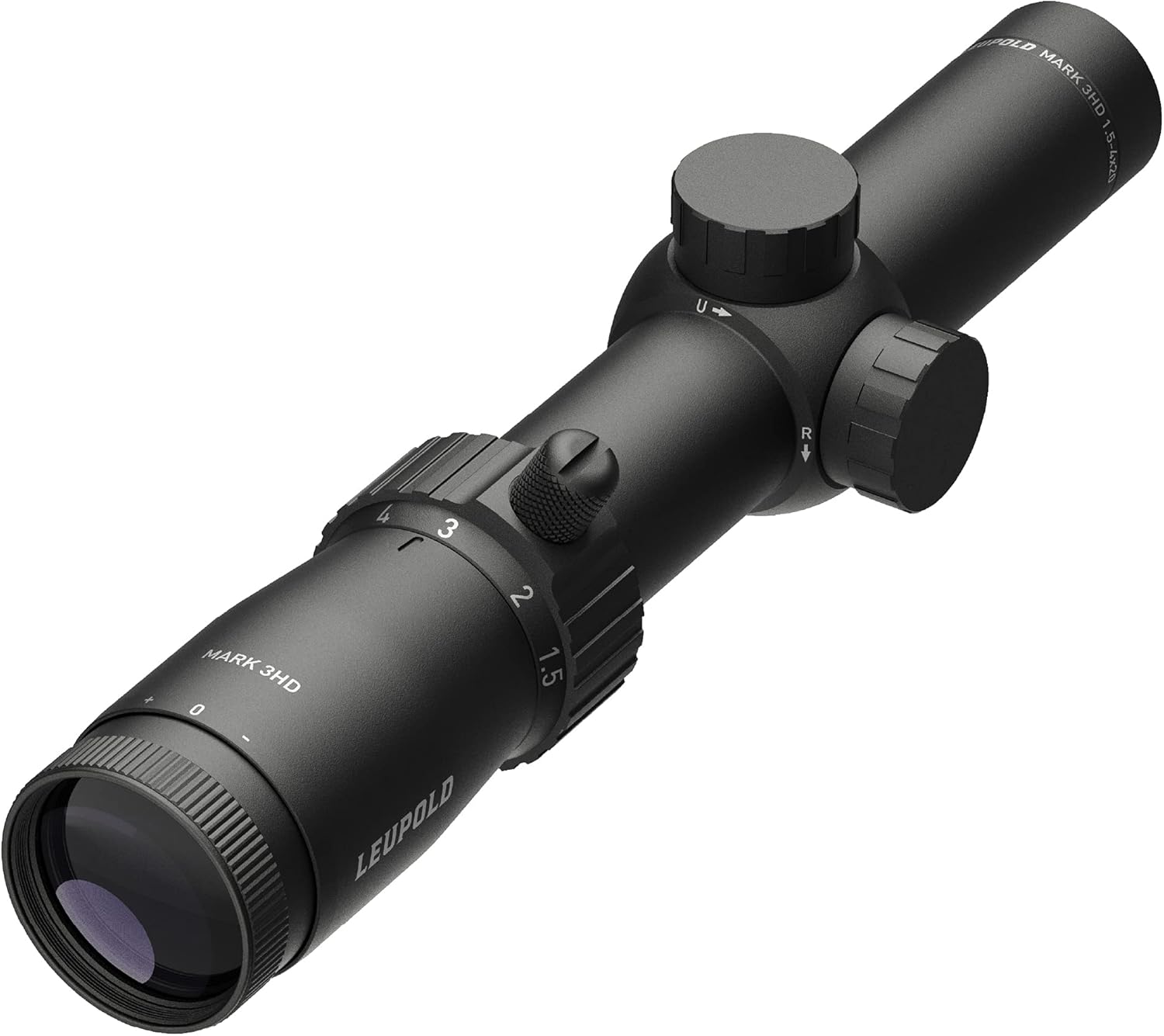
Leupold is the gold standard for lightweight, high-quality optics. The Mark 3HD 1.5-4x20 is a compact powerhouse that is favored by Rimfire Rifle Open (RFRO) shooters who want the clearest glass possible with minimal weight penalty.
- Magnification: 1.5-4x
- Objective Lens: 20mm
- Tube Size: 30mm
- Reticle: FireDot BDC
- Weight: 9.6 oz
- Eye Relief: 3.7 - 4.2 inches
Pros:
* Incredibly lightweight (under 10 ounces).
* FireDot illumination is "daylight bright" and then some.
* Legendary Leupold edge-to-edge clarity.
Cons:
* Starting at 1.5x might be slightly slower for some than a true 1x.
* Smaller objective lens means less light in very dark conditions.
Glass Clarity & Reticle
The HD glass in this scope is phenomenal. There is zero chromatic aberration, and the colors are vivid. The FireDot reticle is the star of the show—it uses a fiber-optic system to create a bright red dot in the center of the crosshairs that is visible even in the brightest Nevada sun.
Eye Relief & Eye Box
Leupold is famous for their "massive" eye box. This scope is incredibly forgiving. You can get a clear picture even if your head is slightly off-center, which is common when you are moving your body to engage the outer plates on "Outer Rim."
Durability
The Mark 3HD is tested to the same standards as Leupold's military-grade optics. It is waterproof, fogproof, and essentially indestructible under normal competition use. It also carries the best lifetime warranty in the industry.
Elevation & Windage Knobs
The turrets are low-profile and precise. The Mark 3HD features an exposed elevation turret with clear markings, which is a nice touch if you ever need to make a quick adjustment for a different distance or wind condition.
Magnification & Parallax
The 1.5-4x range is perfect for Steel Challenge. While 1.5x isn't "true 1x," the glass is so clear that it feels very natural to shoot with both eyes open. The 4x zoom is more than enough for the furthest plates in the sport.
Mounting & Accessories
Because it is so light and short, it mounts easily on almost any platform without requiring specialized high-rise mounts. It uses 30mm rings.
My Personal Experience
Testing this on a lightweight carbon-fiber barreled .22LR was a dream. The total package was so light that I could transition between targets with almost zero inertia. The FireDot is, in my opinion, the best illuminated dot for steel—it’s crisp and doesn't "bloom" like some electronic reticles.
Online Customer Comments
Reviewers on various hunting and sporting forums emphasize the weight savings. One user mentioned, "Replacing my heavy LPVO with the Mark 3HD made my rifle feel like a completely different tool."
Verdict
The Best Scope For Steel Challenge if your primary goal is reducing weight and maximizing glass quality.
➡️➡️➡️ Explore User Feedback and Current Pricing on Amazon
Primary Arms SLX 1-6x24mm SFP Gen III
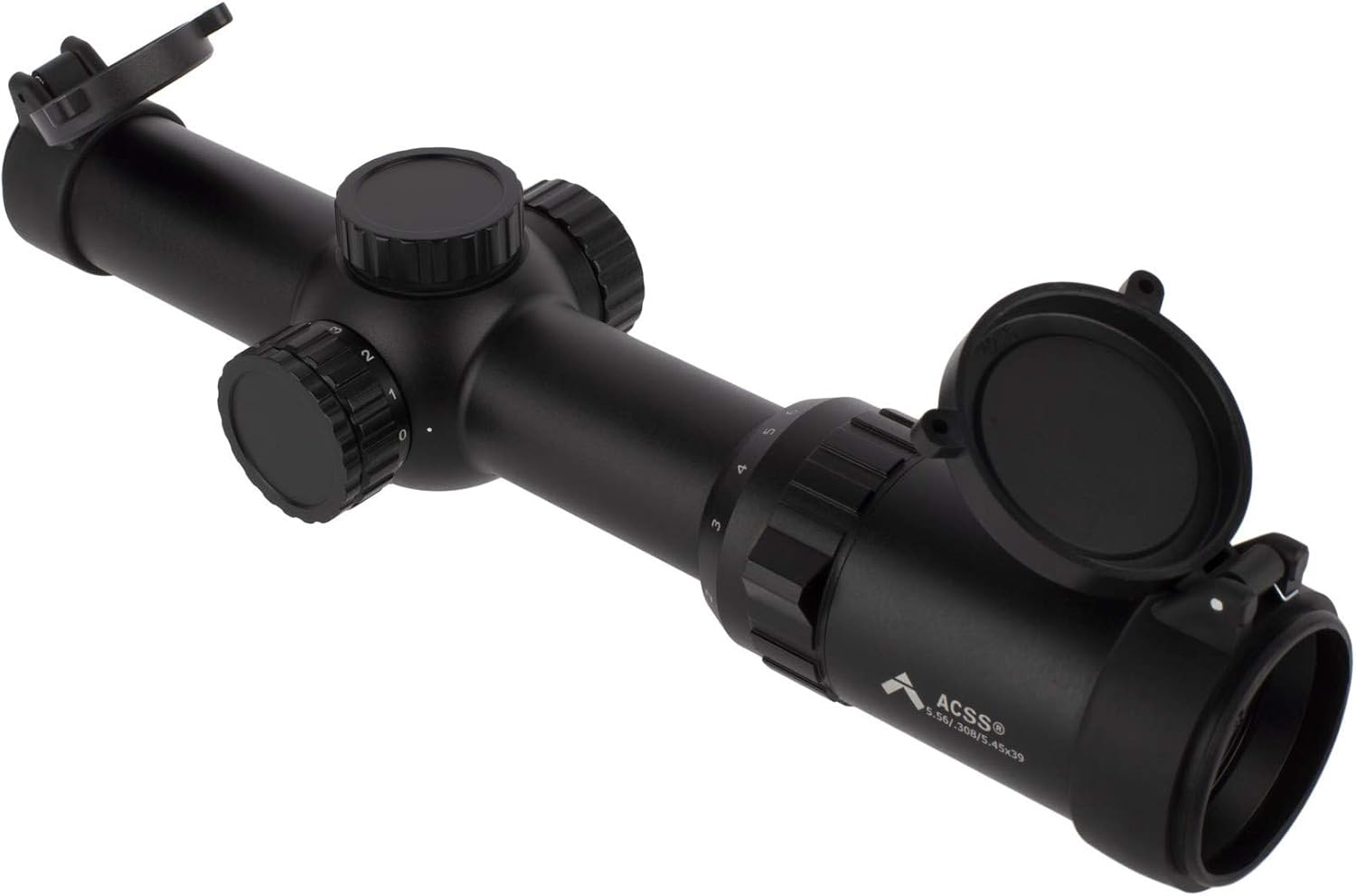
Primary Arms changed the game with their ACSS reticle system. This SLx 1-6x24mm Gen III is a budget-friendly powerhouse that provides an intuitive aiming system that feels like it was "cheating" during fast-paced steel stages.
- Magnification: 1-6x
- Objective Lens: 24mm
- Tube Size: 30mm
- Reticle: ACSS 5.56/.308
- Weight: 16.9 oz
- Eye Relief: 3.3 - 3.5 inches
Pros:
* ACSS reticle is arguably the fastest on the market.
* Very affordable without feeling "cheap."
* Solid warranty and customer support.
Cons:
* Glass isn't quite as sharp as the Leupold or Vortex.
* The illumination isn't quite "red-dot bright" in extreme sun.
Glass Clarity & Reticle
The glass is very respectable for a sub-$300 optic. It’s clear enough to see bullet holes at 50 yards. The ACSS reticle uses a large horseshoe that surrounds a center chevron. For Steel Challenge, you simply put that horseshoe on the plate and squeeze; it’s incredibly fast.
Eye Relief & Eye Box
The eye relief is a bit tighter at 3.3 inches, so you’ll need to spend time practicing your mount to ensure you find the "sweet spot" every time. Once you are in the eye box, the view is clear and unobstructed.
Durability
The SLx line is "field-proven." It’s fog-resistant and waterproof. I’ve seen these used on heavy-recoiling rifles for years with no issues, so on a Steel Challenge rimfire or PCC, it will last forever.
Elevation & Windage Knobs
The turrets are capped and have a decent click feel. They are designed to be "set it and forget it," which is perfect for this application.
Magnification & Parallax
The 1-6x zoom range is smooth, though the magnification ring is a bit stiff out of the box. A throw lever (sold separately) is highly recommended. Parallax is fixed at 100 yards.
Mounting & Accessories
It mounts to any 30mm setup. Primary Arms offers some of the best budget-friendly cantilever mounts that pair perfectly with this scope.
My Personal Experience
When I ran the ACSS reticle on the "Roundabout" stage, I noticed I was focusing less on the "perfect" center of the plate and more on just getting that horseshoe on target. This actually improved my speed because it reduced my "over-aiming" tendency.
Online Customer Comments
The Primary Arms community is huge. On Reddit, the SLx 1-6 is often cited as the "entry-level king." Users love the reticle but often suggest buying a throw lever immediately.
Verdict
If you struggle with "losing" your reticle during fast transitions, the ACSS system in this scope makes it the Best Scope For Steel Challenge for your needs.
➡️➡️➡️ Explore User Feedback and Current Pricing on Amazon
SIG SAUER Tango-MSR LPVO 1-10X28mm
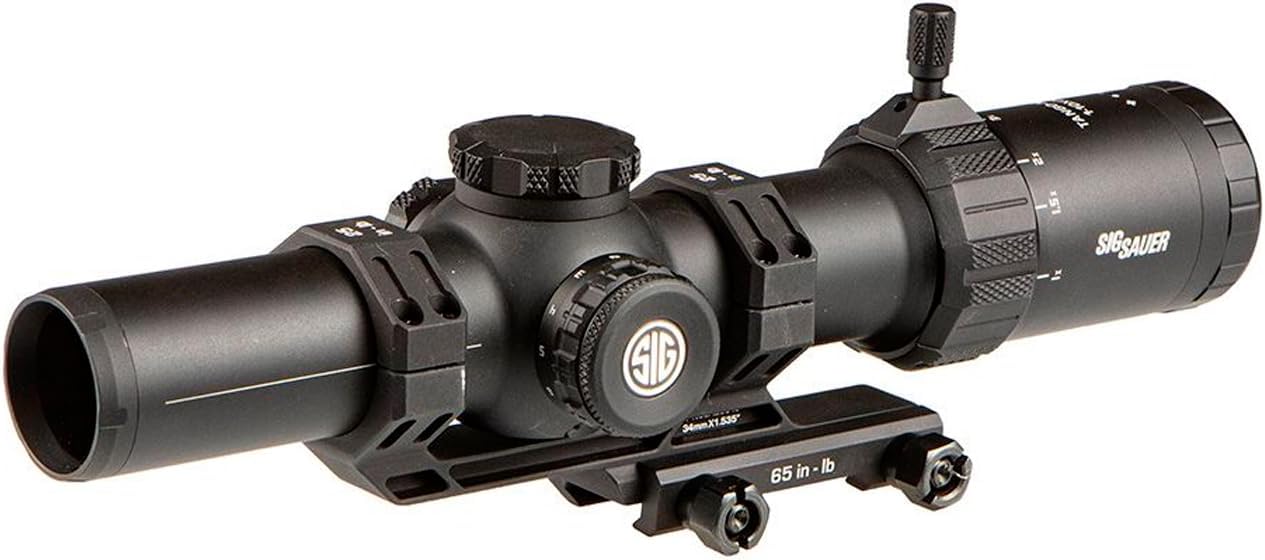
The Sig Sauer Tango-MSR is a high-magnification LPVO that offers an incredible 1-10x range. While 10x isn't necessary for Steel Challenge, the 28mm objective lens provides a slightly larger exit pupil at lower powers, aiding in speed and clarity.
- Magnification: 1-10x
- Objective Lens: 28mm
- Tube Size: 34mm
- Reticle: MSR BDC-10 (SFP)
- Weight: 20.4 oz
- Eye Relief: 3.2 - 3.5 inches
Pros:
* Comes with a high-quality mount included in the box.
* 34mm tube allows for a massive amount of internal adjustment.
* Integrated throw lever.
Cons:
* Heavy at over 20 ounces.
* 10x magnification has a very small eye box.
Glass Clarity & Reticle
The glass is clear and bright, benefited by the larger 34mm main tube. The MSR BDC-10 reticle is clean, with a center dot and a "horseshoe" for fast acquisition. It’s effective for both close steel and long-range targets.
Eye Relief & Eye Box
At 1x, the eye box is excellent. The larger objective lens (28mm vs. the standard 24mm) makes the scope feel "larger" when you look through it. At 10x, however, you have to be very precise with your head position.
Durability
Sig Sauer builds their optics to withstand significant abuse. This scope is IPX7 waterproof and shockproof. The matte finish is also very resistant to scratches and wear.
Elevation & Windage Knobs
The turrets are capped and provide a nice, tactile click. The 34mm tube gives you a lot of elevation travel, which isn't useful for Steel Challenge but is great if you use this rifle for long-range plinking.
Magnification & Parallax
The 1-10x range is impressive. For Steel Challenge, you'll likely stay at 1x or 2x. The transition between magnifications is smooth thanks to the factory-installed throw lever.
Mounting & Accessories
This is a "ready-to-go" kit. It includes the mount, the throw lever, and flip-up lens caps. It’s an incredible value for the price.
My Personal Experience
The weight was noticeable on my PCC, but the clarity of the 1x setting was so good that I didn't mind. Having the mount included meant I could take it out of the box and be at the range in 10 minutes.
Online Customer Comments
Users on r/AR15 often recommend the Tango-MSR as the best "all-in-one" kit. Many people are impressed with the quality of the included Alpha-MSR mount.
Verdict
The best value-added option for someone who wants a complete kit with a huge magnification range.
➡️➡️➡️ Explore User Feedback and Current Pricing on Amazon
Burris Fullfield IV 3-12x42
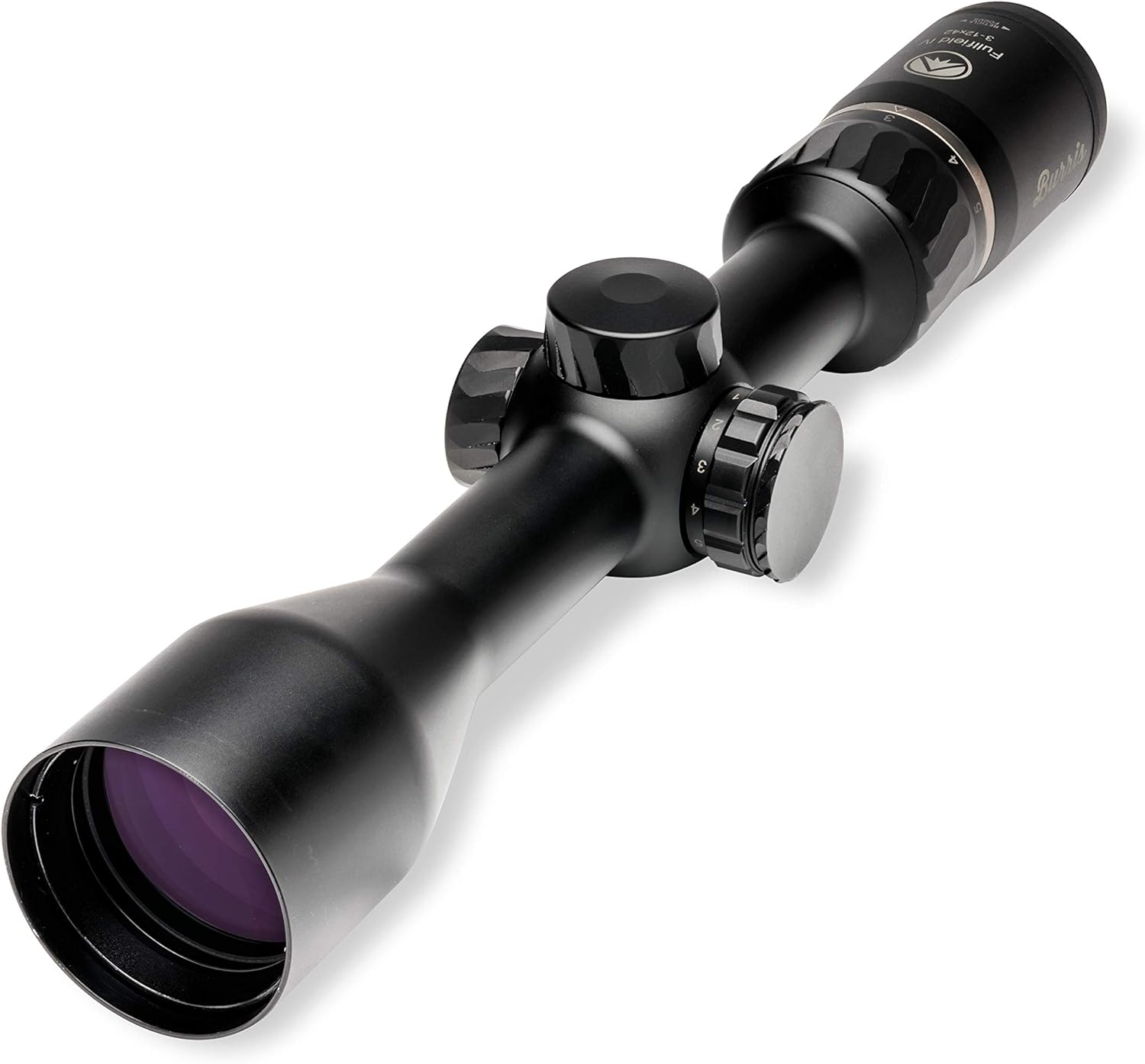
While most Steel Challenge shooters prefer 1x LPVOs, some precision-oriented shooters or those in "Open" divisions prefer a traditional scope like the Burris Fullfield IV. The 3-12x range and 42mm objective lens provide a massive, bright image.
- Magnification: 3-12x
- Objective Lens: 42mm
- Tube Size: 1-inch
- Reticle: Ballistic E3
- Weight: 18.4 oz
- Eye Relief: 3.5 - 3.8 inches
Pros:
* Large 42mm objective lens for superior light gathering.
* Very affordable for the level of magnification.
* Simple, effective reticle.
Cons:
* 3x minimum magnification is too much for some close-range steel stages.
* 1-inch tube has less internal adjustment than 30mm options.
Glass Clarity & Reticle
The glass is surprisingly good for an entry-level scope. The larger objective lens really helps in low-light stages or when shooting under a covered range. The Ballistic E3 reticle is clean and doesn't clutter your view of the plates.
Eye Relief & Eye Box
Because it’s a traditional scope, the eye box is quite generous at 3x. It’s easy to get behind and stay behind. The 3.5+ inches of eye relief is comfortable for any caliber.
Durability
Burris stands behind their "Forever Warranty." The Fullfield IV is built to handle the recoil of magnum hunting rifles, so it will barely feel the "tick" of a .22LR or 9mm.
Elevation & Windage Knobs
The turrets are low-profile and capped. They are finger-adjustable, which makes zeroing at the range very easy without needing a coin or screwdriver.
Magnification & Parallax
The 3-12x range is great for precision. If you find that 1x is too "small" for your eyes, the 3x base magnification on this scope will make those 10-inch plates look massive.
Mounting & Accessories
It uses standard 1-inch rings. This is a traditional design, so it fits perfectly on bolt-action rimfire rifles often used in Steel Challenge.
My Personal Experience
I tried this on a bolt-action .22 for a "Precision Rimfire" style match that included steel plates. While slower than a 1x LPVO on the fastest stages, the increased magnification made the "deep" plates at 35 yards much easier to hit on the first shot.
Online Customer Comments
Reviewers on Amazon and optics forums often mention that this is a great "cross-over" scope for someone who hunts and competes with the same rifle.
Verdict
The Best Scope For Steel Challenge for the shooter who prefers higher magnification and a traditional scope feel.
➡️➡️➡️ Explore User Feedback and Current Pricing on Amazon
How to Choose the Right Scope for This Pistol
Choosing the Best Scope For Steel Challenge requires a shift in mindset compared to choosing a hunting or tactical scope. In Steel Challenge, you aren't fighting a target at 500 yards; you are fighting the clock at 10 to 35 yards. Therefore, the most important feature is Eye Box Forgiveness. When you are drawing from a holster (in centerfire) or starting at low-ready (in rimfire), your head doesn't always land in the same spot on the stock. A scope with a "tight" eye box will show black shadows, forcing you to adjust your head and wasting precious seconds. Look for an optic that allows for significant head movement while still maintaining a clear picture.
Secondly, consider the Reticle Brightness. Most Steel Challenge matches take place in open fields under direct sunlight. A "daylight visible" reticle is not enough; you need "daylight bright." If your reticle looks like a dull red smudge against the white steel plates, you will lose it during fast transitions. Fiber-optic reticles, like those found in the Leupold Mark 3HD, or high-output electronic reticles like the Vortex Venom, are superior because they provide a crisp point of aim that pops against the target.
Lastly, don't overlook Weight and Balance. A heavy scope (over 20 ounces) can make your rifle feel sluggish during the rapid "swing" required for stages like "Showdown" or "Smoke & Hope." A lighter optic allows for faster starts and more precise stops. However, some shooters prefer a bit of weight to help steady the rifle. Generally, for Rimfire divisions, lighter is better. For PCC (Pistol Caliber Carbine), a medium-weight LPVO can help manage the reciprocating mass of the blowback action. Balance is key—ensure your mount and scope combo doesn't make the rifle feel top-heavy or unbalanced.
FAQs
1. Is an LPVO or a Red Dot better for Steel Challenge?
For the Rimfire Rifle and PCC divisions, many top shooters are moving toward LPVOs because they provide a more refined aiming point (like a 1 MOA dot or chevron) compared to the larger 6 MOA dots found on many red dots. However, a Red Dot is lighter. If you want the absolute fastest transition speed, a Red Dot wins; if you want more precision for small plates, an LPVO is the Best Scope For Steel Challenge.
2. Should I choose First Focal Plane (FFP) or Second Focal Plane (SFP)?
For Steel Challenge, Second Focal Plane (SFP) is almost always better. In SFP, the reticle stays the same size even at low magnification. This means you get a large, easy-to-see reticle at 1x, which is perfect for speed. FFP reticles often become tiny and hard to see at 1x unless the illumination is extremely high-end.
3. What magnification setting should I use during a match?
Most competitors leave their scope at 1x or 2x for the entire match. Steel Challenge targets are large and relatively close. High magnification actually slows you down by narrowing your field of view, making it harder to find the next target after a transition.
4. Do I need to dial my turrets during the match?
No. Steel Challenge distances are fixed (7 to 35 yards). You should zero your rifle at a distance that works for all stages (usually 25 yards) and then leave your turrets capped. Speed is the goal, not precision adjustments.
5. Why is eye relief important in this sport?
Eye relief is the distance between your eye and the lens. In Steel Challenge, you are moving quickly. If your eye relief is too short, you risk the scope hitting your face (less of an issue with .22LR, but possible with PCC). More importantly, a generous eye relief range makes it easier to "find" the target quickly from the start signal.
Conclusion
Finding the Best Scope For Steel Challenge is about prioritizing speed, clarity, and weight. The Vortex Venom 1-6x24 stands out as the top choice for most competitors due to its excellent balance of features and "Vortex VIP" peace of mind. However, if you are looking to build the lightest rimfire rig possible, the Leupold Mark 3HD is an unbeatable featherweight option. For those on a budget who still want a world-class reticle, the Primary Arms SLx with the ACSS system offers a distinct advantage in target acquisition speed. No matter which you choose, remember that the best optic is the one you practice with until it becomes an effortless part of your shooting flow. Get out to the range, find your zero, and start ringing that steel!