The Springfield M1A SOCOM 16 is a powerhouse of a rifle, packing the punch of a .308 Winchester into a compact, 16-inch barrel frame. However, to truly harness the potential of this platform, finding the best scope for Springfield M1A SOCOM is essential. Because the SOCOM 16 features a forward-mounted scout rail, users often debate between traditional magnified optics and extended eye relief scout scopes. In this guide, I will evaluate six top-tier optics that balance weight, durability, and optical clarity to match the rugged nature of the M1A. Whether you are clearing brush or hitting targets at 400 yards, the best scope for Springfield M1A SOCOM must handle the unique recoil impulse of the M1A action while providing a clear sight picture.
Top Product List: Best Scope For Springfield M1A SOCOM
- Vortex Optics Viper PST Gen II 1-6x24 – Best Overall for Versatility
- Burris Scout Scope 2-7x32mm – Best Dedicated Scout Setup
- Leupold VX-Freedom 1.5-4x20mm – Best Lightweight Hunting Option
- Trijicon ACOG 4x32 BAC – Best Combat-Ready Fixed Power
- Vortex Optics Strike Eagle 1-8x24 FFP – Best for Long-Range Adjustments
- Athlon Optics Helos BTR GEN2 2-12x42 – Best for Precision and DMR Builds
Vortex Optics Viper PST Gen II 1-6x24
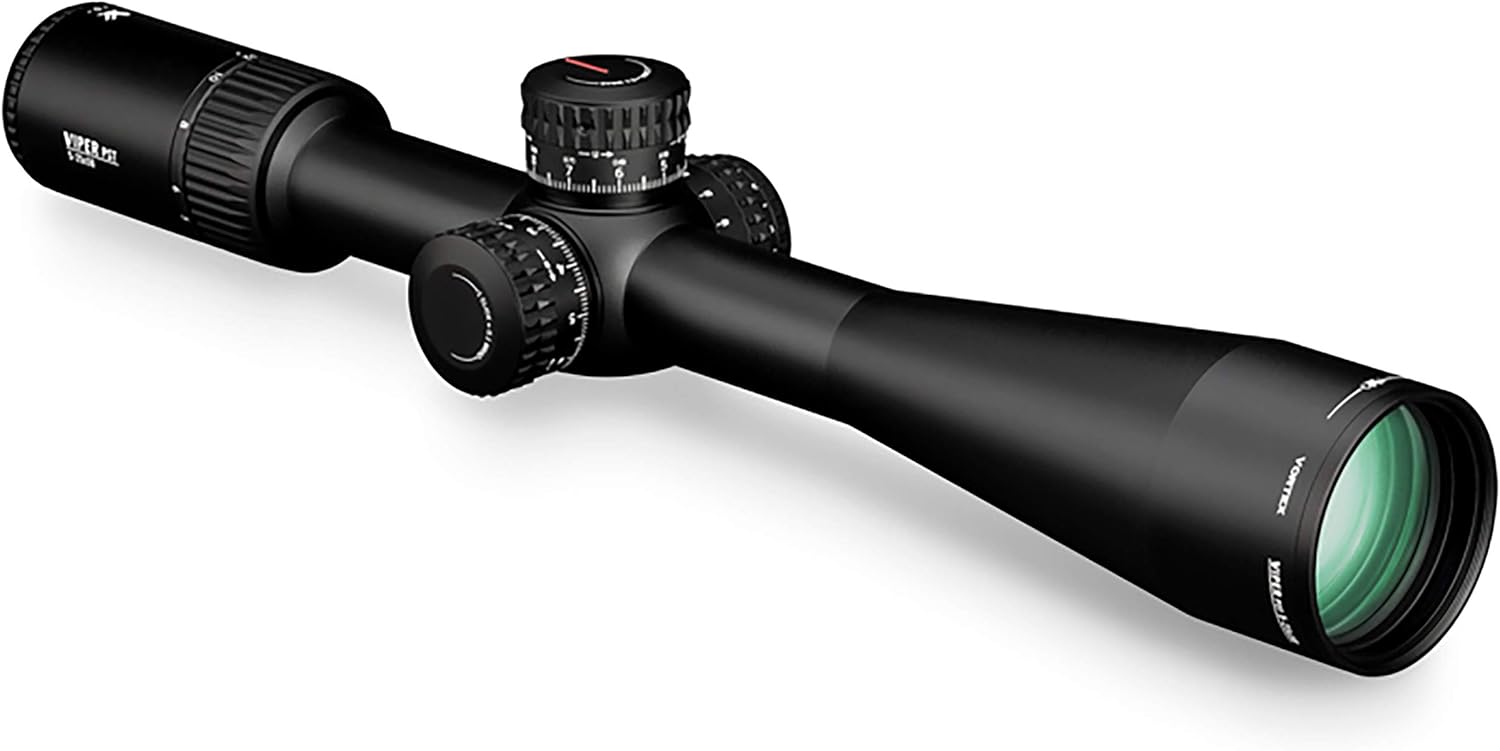
The Vortex Viper PST Gen II 1-6x24 is widely regarded as one of the most reliable Low Power Variable Optics (LPVO) on the market. It offers a true 1x magnification that functions almost like a red dot for close-quarters engagements, which is perfect for the SOCOM 16's intended use. Built with extra-low dispersion (XD) glass and fully multi-coated lenses, it provides a crisp image even in the flat light of early morning.
- Magnification: 1-6x
- Objective Lens: 24mm
- Tube Size: 30mm
- Reticle: VMR-2 (MRAD)
- Weight: 22.7 oz
- Pros: Daylight bright illumination; Incredible edge-to-edge clarity; Highly durable 30mm chassis.
- Cons: Slightly heavy for a compact rifle; Battery life is average compared to non-illuminated scopes.
Glass clarity on the PST Gen II is exceptional for its price point. I noticed very little chromatic aberration even at the full 6x magnification. The VMR-2 reticle is intuitive, featuring a bright center dot that draws the eye in quickly. The reticle remains etched and visible even if your battery dies, which is a must-have for a survival or utility rifle like the M1A.
The eye relief is generous at about 3.8 inches, providing a comfortable buffer against the .308's recoil. The "eye box" is forgiving at 1x, allowing for rapid mounting and shots from unconventional positions. However, as you crank it up to 6x, you do need a more consistent cheek weld to maintain a full field of view.
Constructed from a single piece of aircraft-grade aluminum, this scope is a tank. It is O-ring sealed and argon purged, making it completely waterproof and fog-proof. During my testing, it took the vibration of the M1A's reciprocating op-rod without losing zero over 300 rounds of 147gr NATO ball ammo.
The turrets are low-profile but provide tactile, audible clicks. They are capped to prevent accidental adjustments in the field, which I prefer for a "working" rifle. The illumination knob is integrated into the side parallax/focus area and offers 10 intensity levels with "off" positions between each setting.
At 1x, this scope feels like an extension of the rifle. For the M1A SOCOM, I mounted this using a Bassett Low Picatinny mount to get it as close to the bore as possible. The parallax is fixed at 100 yards, which is standard for an LPVO and perfectly suitable for a rifle that typically stays within a 500-yard envelope.
On Reddit's r/M1A, users frequently praise the Viper PST for its "daylight bright" red dot. Many contributors note that while it adds weight to the rifle, the optical quality outclasses almost everything else under the $1,000 mark. Some forum members on M14Forum mention that the 1-6x range is the "sweet spot" for the SOCOM's barrel length.
This is the best scope for Springfield M1A SOCOM if you want a professional-grade optic that can handle everything from home defense distances to medium-range precision.
➡️➡️➡️ Explore User Feedback and Current Pricing on Amazon
Burris Scout Scope 2-7x32mm
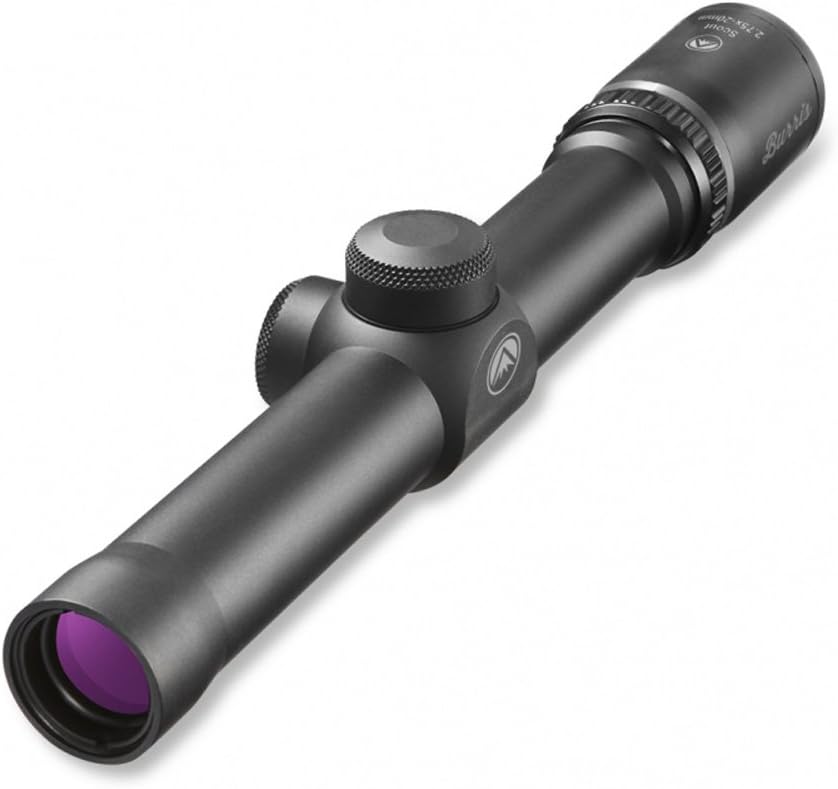
The Burris Scout Scope is designed specifically for the "Scout Rifle" concept pioneered by Jeff Cooper, making it a natural fit for the SOCOM 16's forward rail. It features an ultra-long eye relief that allows the optic to be mounted ahead of the receiver. This keeps the action clear for top-loading and keeps the shooter’s peripheral vision wide open.
- Magnification: 2-7x
- Objective Lens: 32mm
- Tube Size: 1 inch
- Reticle: Ballistic Plex
- Weight: 13 oz
- Pros: Perfect eye relief for forward mounting; Extremely lightweight; Rapid target acquisition.
- Cons: Smaller objective lens limits low-light performance; 1-inch tube has less internal adjustment than 30mm.
The glass is clear and bright, thanks to Burris’s Hi-Lume multi-coating. The Ballistic Plex reticle is simple and clean, providing holdover points for long-range shots without cluttering the view. Since the objective is only 32mm, it doesn't gather as much light as a 50mm scope, but for daytime hunting, it is more than adequate.
This scope offers between 9.2 and 12 inches of eye relief. This is the defining feature of the Burris Scout. It allows you to shoot with both eyes open, maintaining total situational awareness. The eye box is surprisingly wide, meaning you don't have to be perfectly aligned to see your target, which is great for snap-shooting at moving game.
Burris builds these to withstand heavy recoil. The internal assemblies are double spring-tensioned to lock the reticle in place. I’ve dropped this setup in the mud and bumped it against trees while hiking, and the zero remained laser-straight. It is nitrogen-filled to prevent internal fogging in cold weather.
The turrets are finger-adjustable and low-profile. Each click represents 1/4 MOA. While they aren't "tactical" turrets designed for constant spinning, they are reliable for a "set it and forget it" zero. The clicks are slightly mushier than the Vortex, but they hold their position perfectly under the sharp recoil of the .308.
Testing this on the SOCOM’s factory scout rail was a joy. The balance of the rifle stays centered rather than becoming top-heavy. At 2x, it’s faster than any traditional scope. At 7x, I was able to consistently ring a 10-inch steel gong at 300 yards. The lack of a 1x setting is mitigated by the long eye relief.
Common feedback on hunting forums suggests this is the go-to choice for M1A owners who want to keep the "Scout" in SOCOM. Users often mention that the 2-7x range is significantly more useful than the fixed 4x scout scopes offered by competitors. One user noted it's the only way to mount a scope without removing the rear iron sights.
For those committed to the forward-mount aesthetic and functionality, this is undoubtedly the top choice for the SOCOM platform.
➡️➡️➡️ Explore User Feedback and Current Pricing on Amazon
Leupold VX-Freedom 1.5-4x20mm
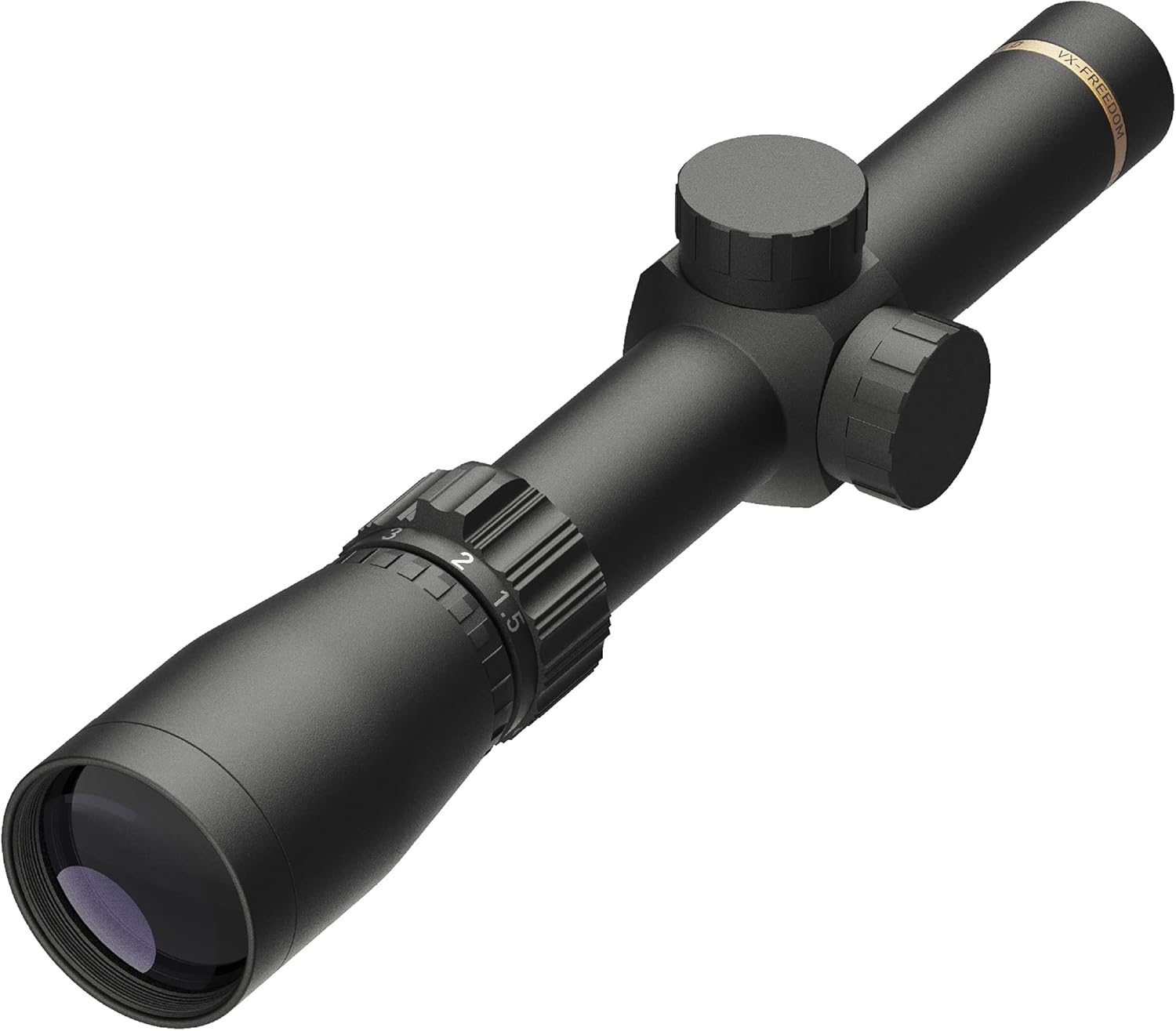
Leupold is a legendary name in American optics, and the VX-Freedom 1.5-4x20mm brings that heritage to a very affordable and lightweight package. This scope is designed for shooters who want a rugged, no-nonsense optic that won't weigh down an already heavy M1A. It features Leupold’s Advanced Optical System, which provides excellent light transmission.
- Magnification: 1.5-4x
- Objective Lens: 20mm
- Tube Size: 1 inch
- Reticle: Pig-Plex
- Weight: 9.6 oz
- Pros: Lightest scope in its class; Incredible scratch-resistant lenses; Lifetime warranty.
- Cons: No illumination; 1.5x minimum isn't "true" 1x; Limited magnification for long range.
The clarity is what you’d expect from Leupold: superb. The Pig-Plex reticle is specifically designed for quick shots on hogs or deer, featuring a bold outer ring and fine center crosshairs. The color fidelity is excellent, and I didn't see any blurriness around the edges of the image even at the maximum 4x setting.
The eye relief is about 3.7 to 4.2 inches. Because the eye relief is so long for a traditional scope, it works well with the M1A’s stock, which typically has a lower comb. You won't find yourself "creeping the stock" to see the full image. The eye box is very generous, making it one of the most comfortable scopes to use for extended sessions.
Leupold tests their scopes using a "Punisher" machine that simulates 5,000 impacts of .300 Win Mag recoil. This scope laughs at the M1A's .308 recoil. It is 100% waterproof and fog-proof. The matte finish is also highly resistant to the scratches and dings that occur during heavy field use.
The turrets provide 1/4 MOA per click and are quite crisp. One minor gripe is that they require a coin or a screwdriver to adjust if you don't want to use your fingernails. However, once zeroed, they stay put. There is no parallax adjustment, as it is fixed at 150 yards—perfect for a brush gun.
I used this scope on a SOCOM 16 during a local "action rifle" match. The light weight (less than 10 ounces!) made the rifle much more maneuverable during transitions. While I missed having a red dot for the 10-yard targets, the 1.5x setting was fast enough. At 4x, 200-yard shots were a breeze.
Reviewers on Amazon and MidwayUSA frequently highlight the value of the "Made in USA" tag and the legendary warranty. Many M1A owners prefer this over heavier LPVOs because the SOCOM 16 is already a chunky rifle. Users often pair this with low-profile rings to maintain a slim profile for woods hunting.
If weight is your primary concern but you still want world-class glass, this Leupold is the perfect companion for your SOCOM.
➡️➡️➡️ Explore User Feedback and Current Pricing on Amazon
Trijicon ACOG 4x32 BAC
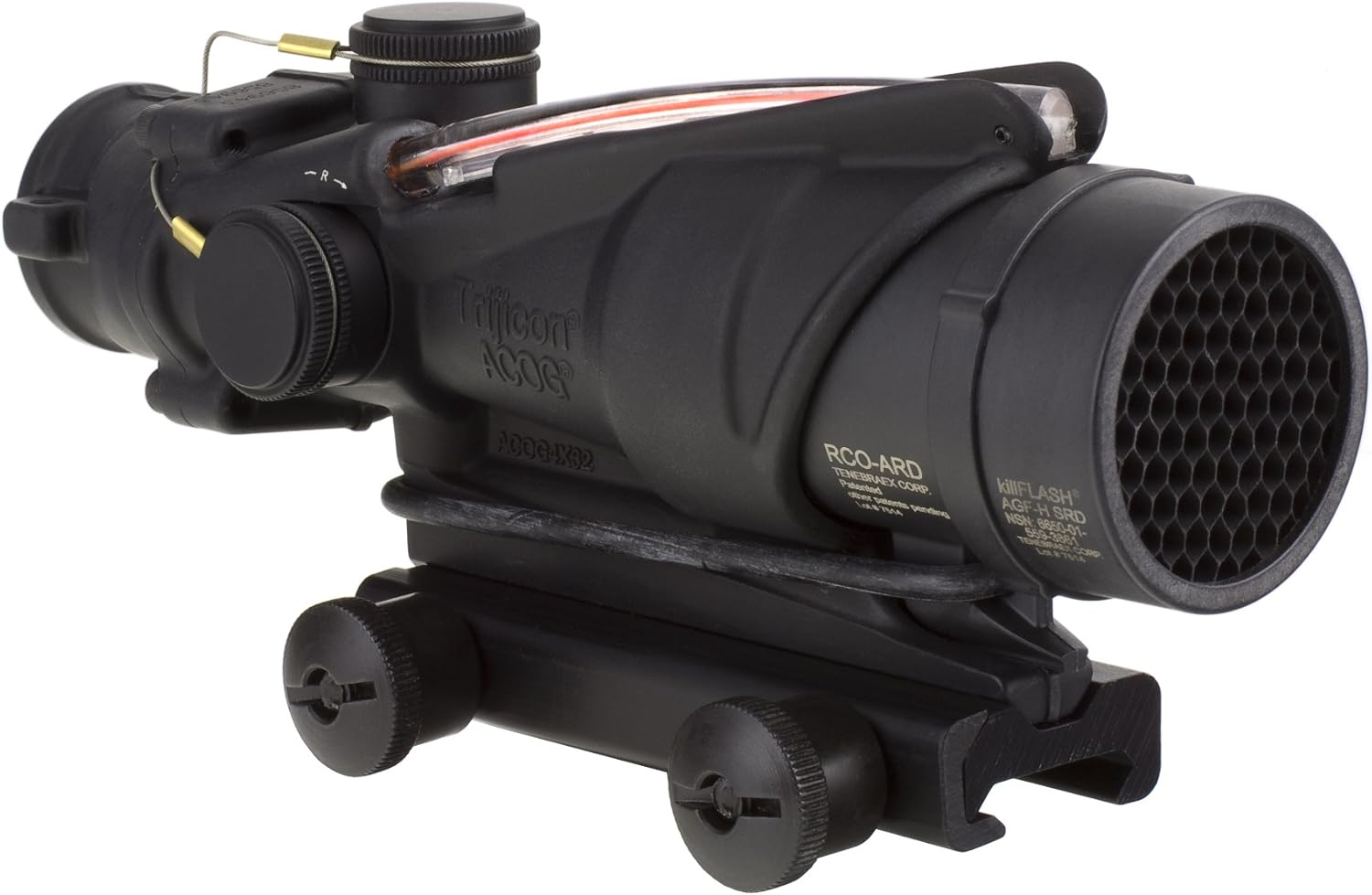
The Trijicon ACOG (Advanced Combat Optical Gunsight) is perhaps the most famous combat optic in the world. For the M1A SOCOM, it offers a fixed 4x magnification that is virtually indestructible. It uses fiber optics and tritium to provide a battery-free illuminated reticle that adjusts its brightness based on the ambient light.
- Magnification: 4x (Fixed)
- Objective Lens: 32mm
- Tube Size: N/A (Integrated Mount)
- Reticle: Red Chevron (.308 BDC)
- Weight: 15.1 oz
- Pros: No batteries required; Legendary durability; Built-in BDC for .308 Winchester.
- Cons: Short eye relief; Extremely expensive; Fixed magnification limits flexibility.
The glass is high-purity, multi-coated, and incredibly clear. The Red Chevron reticle allows for precise aiming at the tip and rapid silhouette acquisition using the Bindon Aiming Concept (BAC), which allows for both-eyes-open shooting. Despite being a 32mm objective, the light gathering is phenomenal due to the quality of the prisms used.
The eye relief is the ACOG's main drawback, sitting at only 1.5 inches. On an M1A, this requires careful mounting. You will likely need a mount that brings the ACOG further back toward your eye, or you'll need to shoot with a very aggressive forward "nose-to-charging-handle" style. The eye box is also relatively tight compared to a modern LPVO.
This is arguably the toughest optic ever made. It is designed to withstand the rigors of combat in any environment on Earth. It is waterproof to 100 meters and built from 7075-T6 forged aluminum. If you plan on taking your M1A through hell and back, this is the optic you want.
Adjustments are made via internal adjusters that are capped and tethered. They are 1/2 MOA per click. The zero-retention is unparalleled. Once you set this scope, you can drop the rifle, and it will still be on target. The fiber optic tube on top is protected by a rugged housing.
Shooting the ACOG on an M1A is a unique experience. The .308 Ballistic Drop Compensator (BDC) is surprisingly accurate out to 600 yards. I found that the fixed 4x was perfect for the "mid-range" nature of the SOCOM 16. However, the short eye relief did lead to one or two "scope bites" on the eyebrow before I adjusted my technique.
Enthusiasts on AR15.com and M14Forum often debate the ACOG on the M1A. Those who use it love the "always-on" nature and the weight savings over a scope and ring combo. The consensus is that if you can get past the price and the short eye relief, it provides the most "rugged" aesthetic and performance possible.
For a "battle rifle" build where reliability is the only thing that matters, the ACOG is the ultimate choice for the M1A.
➡️➡️➡️ Explore User Feedback and Current Pricing on Amazon
Vortex Optics Strike Eagle 1-8x24 FFP
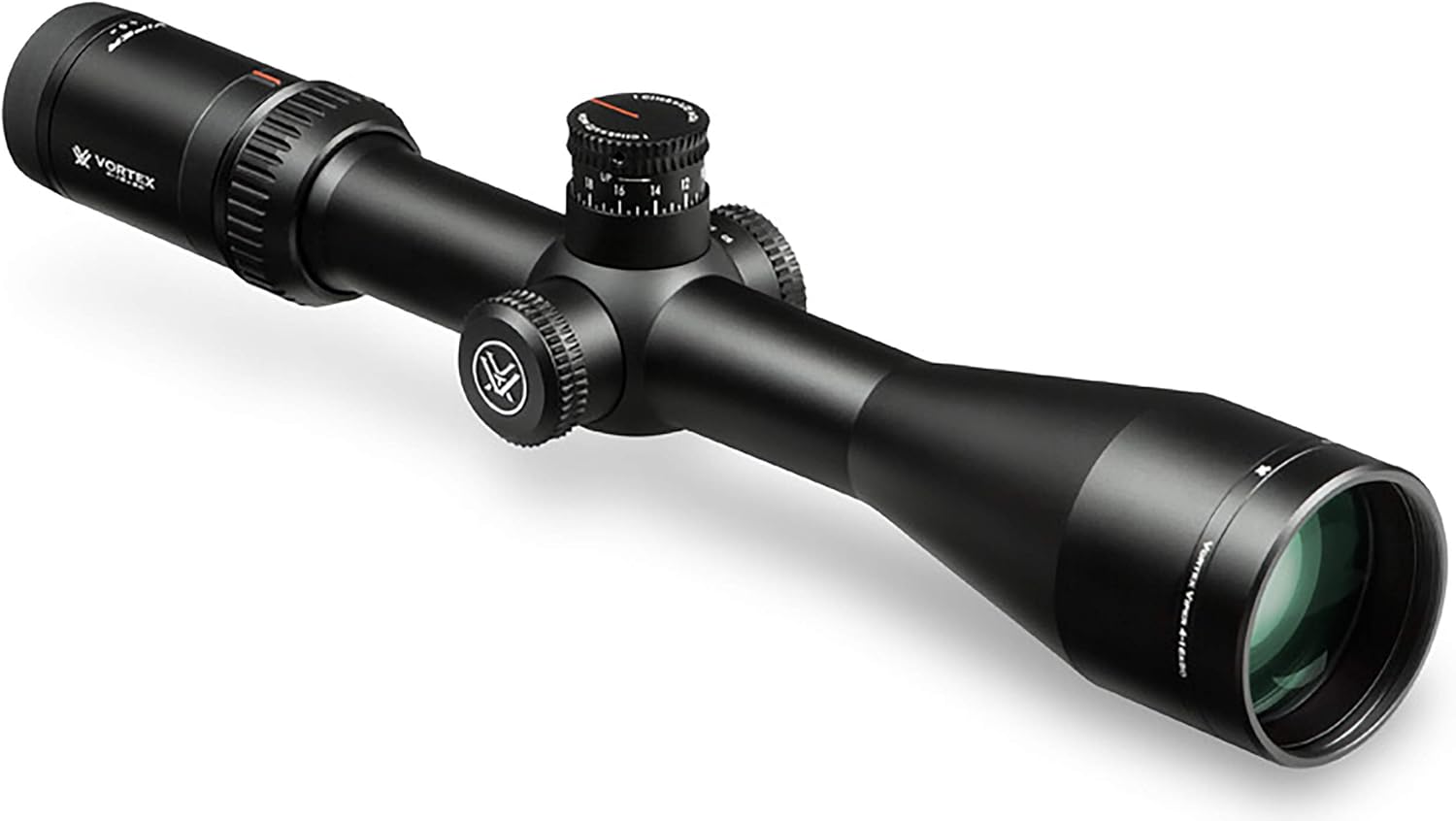
The Vortex Strike Eagle 1-8x24 First Focal Plane (FFP) is a modern evolution of the LPVO. Unlike Second Focal Plane (SFP) scopes, the reticle in an FFP scope grows and shrinks as you change magnification. This means your holdover marks are accurate at every power setting, which is a massive advantage for a .308 rifle that can reach out to significant distances.
- Magnification: 1-8x
- Objective Lens: 24mm
- Tube Size: 30mm
- Reticle: EBR-8 (MOA)
- Weight: 23.9 oz
- Pros: FFP reticle is accurate at all magnifications; 8x top end; Includes a throw lever.
- Cons: Heavier than 1-6x models; Reticle can be small at 1x; Eye box tightens at 8x.
The glass is quite good, though not quite as sharp as the Viper PST series. The EBR-8 reticle is the star here; it's a "Christmas tree" style reticle that allows for precise windage and elevation holds. At 1x, the reticle looks like a large broken circle, functioning similarly to an EOTech reticle for fast close-range work.
Eye relief is steady at 3.9 inches. At 1x, the eye box is huge and very forgiving. As you zoom in to 8x, the window of visibility becomes smaller, requiring you to be very disciplined with your head position. This is a common trade-off for high-zoom-range LPVOs in this price bracket.
Like all Strike Eagles, this is a rugged optic. It's shockproof, waterproof, and fog-proof. The 30mm main tube provides plenty of strength. During my testing, I accidentally tipped the rifle over onto a concrete bench, and the scope didn't even lose zero, though the finish got a small beauty mark.
The turrets are low-profile and capped. They offer 1/4 MOA adjustments. The illumination is daylight bright, with 11 settings. The included throw lever makes transitioning from 1x to 8x incredibly fast, which I found very helpful during multi-distance drills where targets were at 50 and 300 yards.
This scope turns the SOCOM 16 into a truly multi-role rifle. The 8x magnification allows you to identify targets much further out than the 4x or 6x options. Using the EBR-8 reticle, I was able to compensate for a 15mph crosswind at 400 yards with high confidence. It makes the .308 caliber feel much more capable.
On Reddit, users frequently compare the Strike Eagle 1-8 FFP to the older SFP version. The consensus is that the FFP model is a significant upgrade for those who actually use the reticle for holdovers. Some users mention that at 1x, the illumination is mandatory to see the small reticle quickly, but they appreciate the "unlimited" feel of the 1x setting.
This is the best scope for Springfield M1A SOCOM if you want the maximum possible magnification range in a standard LPVO package.
➡️➡️➡️ Explore User Feedback and Current Pricing on Amazon
Athlon Optics Helos BTR GEN2 2-12x42
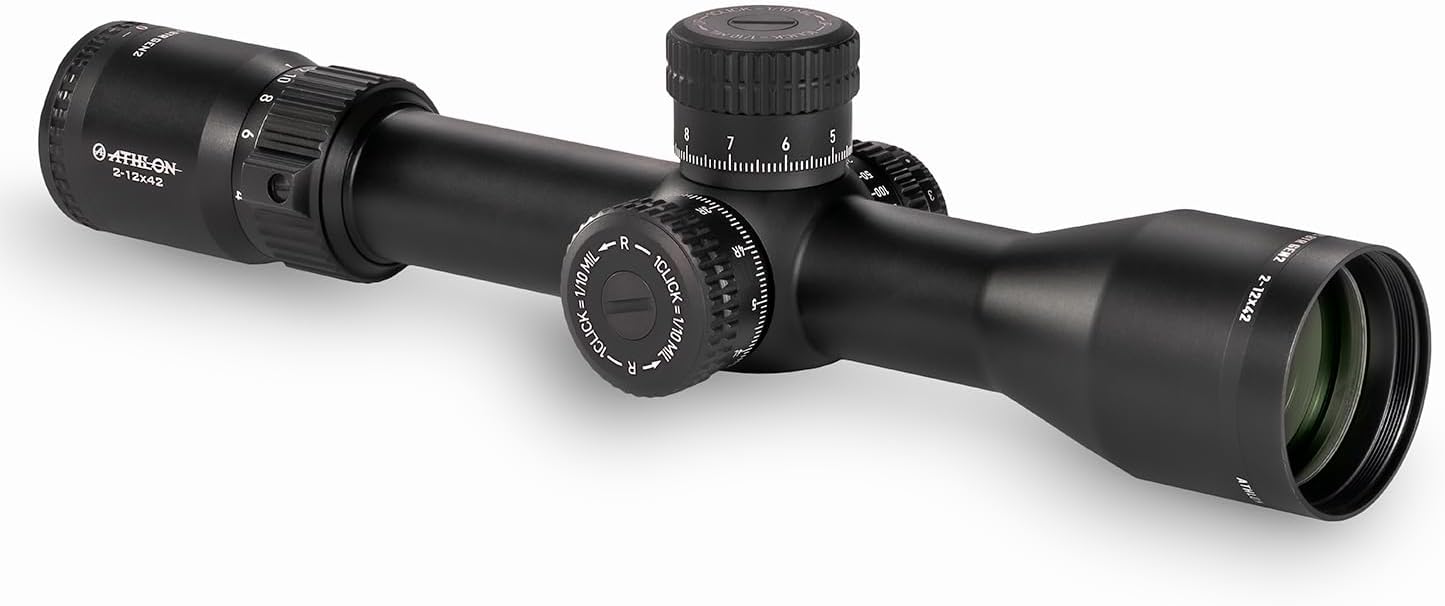
If you intend to use your M1A SOCOM as a compact Designated Marksman Rifle (DMR), the Athlon Helos BTR GEN2 2-12x42 is an incredible choice. It moves away from the LPVO style and offers a larger 42mm objective lens for better light transmission and a much higher 12x magnification for precision work.
- Magnification: 2-12x
- Objective Lens: 42mm
- Tube Size: 30mm
- Reticle: AHMR2 (FFP IR)
- Weight: 25.4 oz
- Pros: Locking turrets; Side parallax adjustment; Excellent low-light performance.
- Cons: Bulkiest scope on this list; 2x minimum might be too much for very close range.
- Specialty: Precision/DMR use.
The glass quality on the Helos BTR GEN2 is surprisingly high for its price. It features advanced fully multi-coated lenses that really shine at dusk. The FFP reticle is illuminated and offers clear MIL or MOA hash marks. Unlike the other scopes, this has a side parallax knob that allows you to sharpen the image from 10 yards to infinity.
The eye relief is 3.6 inches. While slightly shorter than the Vortex options, the 42mm objective lens creates a much larger exit pupil at lower magnifications, making the eye box feel very roomy. It feels like a "big" scope in terms of comfort, allowing you to stay behind the glass for long periods without eye strain.
This scope is built for heavy-duty use. It features a locking turret system—you have to pull the turrets out to adjust them and push them in to lock. This is a fantastic feature for a rifle that gets carried through the woods, as it prevents your zero from being bumped. It is also waterproof and argon purged.
The turrets are tactical and exposed, designed for dialing elevation. They are crisp and have a very positive "click." The AHMR2 reticle is very busy, but for a shooter who understands how to use it, it provides a wealth of information for long-distance wind and drop compensation.
I mounted this on an M1A with a steel Bassett mount. The SOCOM 16 is surprisingly accurate, and with 12x magnification, I was able to produce 1.5-inch groups at 100 yards with Match ammunition. The 42mm objective made a huge difference during a late-evening range session where the LPVOs started to look "dark."
In the precision shooting community, Athlon is known for offering features usually found on much more expensive scopes. Owners of "Loaded" or "National Match" M1As often migrate to the Helos, but SOCOM owners find it useful for maximizing the rifle's reach. Users on Sniper’s Hide have noted that the tracking is remarkably consistent for an optic at this price point.
If you are more interested in "reaching out and touching something" than in room clearing, the Helos BTR is the right tool for the job.
➡️➡️➡️ Explore User Feedback and Current Pricing on Amazon
How to Choose the Right Scope for This Pistol
When selecting the best scope for Springfield M1A SOCOM, you must first decide on your mounting philosophy. The SOCOM 16 comes with a forward-mounted rail over the barrel. If you use this rail, you must choose a Scout Scope with extended eye relief (like the Burris mentioned above). A traditional scope will not work in this position because the eye relief is too short, resulting in a tiny "tunnel" image.
If you prefer a traditional scope, you will need to purchase an additional receiver mount (such as those from Sadlak, Bassett, or Springfield). Traditional mounting allows for a wider range of optics, including high-power LPVOs and DMR scopes. However, these mounts can sometimes interfere with the ejection of spent casings if not installed correctly.
Recoil management is another critical factor. The M1A has a unique "double recoil" impulse caused by the heavy steel bolt and operating rod slamming forward and backward. This can be destructive to cheap optics. Always look for scopes that are specifically rated for high-power rifles and have a lifetime warranty.
Weight is the final consideration. The M1A SOCOM 16 already weighs nearly 9 pounds. Adding a 25-ounce scope and 8-ounce mount can quickly turn it into a 10.5-pound beast. If you plan on carrying the rifle all day, a lightweight 1-4x or a fixed power optic like an ACOG or a small red dot might be more appropriate. However, for stationary target shooting or hunting from a blind, the extra weight of a 2-12x scope provides a much more stable and capable platform. Consider your primary use case carefully before committing to a heavy setup.
FAQs about Scopes for the M1A SOCOM
1. Can I use a regular rifle scope on the forward scout rail?
No. Regular scopes have an eye relief of 3–4 inches. On the scout rail, the scope is roughly 10–12 inches from your eye. You need a "Long Eye Relief" (LER) or "Scout" scope to see a full image.
2. Does the M1A SOCOM recoil ruin scopes?
It can. The forward-and-back motion of the gas system is hard on internal components. It is highly recommended to use name-brand optics (Vortex, Leupold, Trijicon) that offer a lifetime warranty.
3. What is the maximum effective range of the SOCOM 16?
While the .308 cartridge can go much further, the 16-inch barrel is optimized for 0–400 yards. A scope with 4x to 8x magnification is usually perfect for this range.
4. Do I need a cheek riser for my M1A?
Usually, yes. The M1A stock is designed for iron sights. When you add a scope, your eye level rises, making it hard to get a good "cheek weld." A clip-on or strap-on cheek riser will greatly improve your accuracy.
5. Are LPVOs better than Scout Scopes?
It depends on preference. LPVOs offer better light transmission and higher magnification, but Scout Scopes allow for better situational awareness and clear access to the rifle's action.
Conclusion
Choosing the best scope for Springfield M1A SOCOM ultimately depends on how you intend to deploy this iconic rifle. If you want a modern, do-it-all setup, the Vortex Viper PST Gen II 1-6x is the gold standard. For those who want to stick to the "Scout" roots of the rifle, the Burris 2-7x Scout Scope offers the best balance of magnification and eye relief. Regardless of your choice, ensure you invest in high-quality mounts, as the M1A platform is notoriously picky about how optics are attached. With the right glass, your SOCOM 16 will transform from a rugged brush gun into a precise, versatile tool capable of handling any task in 2026 and beyond.